
Alexander Sabal, Director General of Digital Space Control, Ministry of Communications and Information Technology (Komdigi) of Indonesia, announced that 16 major digital platforms, such as TikTok, Meta and Google, had agreed to strengthen the content of the lottery. The Ministry expects to improve the effectiveness of content regulation through this “new multi-sectoral synergy” to help “cut off web gambling and its content transmission chain”.

Sabar indicated that the Government and the Digital Platform had agreed to “strengthen the scrutiny of harmful content” with a focus on online lottery areas. “It is hoped that the platform will work with our internal efforts to fill the existing gaps and that the entire system will become fully operational next month.” He was referring to the Indonesian Content Audit System, SAMAN, which had been piloted in October 2024 and officially launched in February 2025, with the pilot period ending next month. Komdigi stressed that SAMAN would be used to address harmful content generated by users, including online gambling, pornography and hate speech. Sabal described the system as essential for maintaining “clean, safe, healthy and constructive” digital space. The Ministry warned that the offending platform might face administrative penalties. Data show that more than 2.8 million hazardous items were removed between October 2024 and 16 September 2025, of which 2.1 million related to online lottery. The breakdown is as follows: 1,932,000 web sites; 97,000 document-sharing services; 94,000 Meta applications; 35,000 Google; 17,000 X platforms; 1,742 Telegram; 1001 TikTok; 14 Line; and 3 app stores.

Gambling triggers social and family crises.
Officials noted that gambling was having a devastating impact on families. Sabal warns that online games lead to “child loss of future, parents loss of property, family breakdown”. Senior politicians in Belau County described most of the local divorce cases as “enhanced by the growing popularity of online gambling platforms”. Academic studies have confirmed that gambling-related divorces have continued to rise over the past five years, peaking in 2023, and the DePok court has indicated a marked increase in such cases after the new coronary outbreak. The Ministry of Social Affairs has begun to suspend the payment of benefits to families involved in online lottery. The Minister of Social Affairs, Gus Ipul, confirmed the participation of some 600,000 beneficiaries in gambling activities, “of whom 300,000 have been disqualified from the benefits and the benefits will be cancelled as soon as the gambling is proven”. In Nanpei, 90 families have been disqualified.
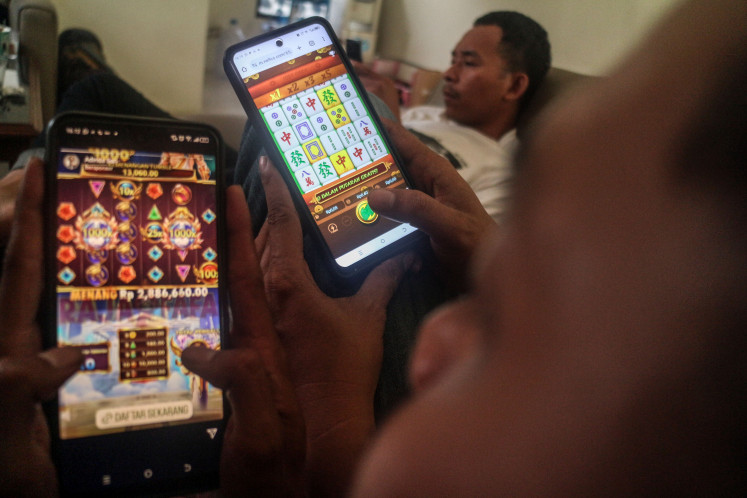
The Financial Transactions Reporting and Analysis Centre (PPATK) has tracked that 2 million out of 12 million benefit recipients are ineligible, of which 600,000 are related to online casinos. Yussov stated that it was in the process of re-testing to ensure fairness: “There may be cases of fraudulent use by others, and therefore a compounding is necessary”.
A lot of gambling money.
Data show that 49,000 beneficiaries in West Java, Indonesia, involve 1.9 trillion guilders (approximately $12 million) in gambling transactions, 83 billion in Central Java, 53 billion in East Java and 360 billion in Jakarta. A total of 132,000 benefit recipients across Indonesia have been involved in the gambling of 5.425 trillion guilders (approximately $32.7 million), mainly through DANA electronic wallets and through banks such as BCA, BRI, BNI, Mandiri. The police have frozen 1.543 trillion (approximately $9.8 million) of the 811 gambling bank accounts. The High Commissioner for Cyber Crime Investigation, Ferdy Sarashi, stated: “There is a strong suspicion that these funds are generated by online gambling and that tracing operations will continue. “

Earlier this year, the Financial Services Authority (OJK) had requested banks to freeze nearly 26,000 gambling accounts. PPATK estimates that between 2017 and June 2025, the Gaming Platform processed $976.8 trillion (6.18 million) of funds through 709 million transactions. Electronic wallets are also monitored – in the first half of 2025, a gambling deposit through electronic wallets amounted to 1.6 trillion guilders (approximately $10.1 million). The CEO of DANA, Vince Iswara, stated that the company had improved its fraud detection system by “80 per cent reduction in gambling activities”. The authorities are also preparing to impose stricter controls on the VPN, which was used by some 39 per cent of Indonesians in 2022, 30 per cent of which was for restricted access.