The game and electronics industry in India is at a critical turning point. This area, once considered to be digital entertainment, has rapidly evolved into a policy-sensitive sector with global cultural and economic influence. Driven by regulatory advances, increased grass-roots participation and increased international attention, game and electricity competition have become deeply integrated into India ‘ s digital and creative economic narrative. With the federal budget for the 2026-2027 fiscal year, to be submitted by India ‘ s Finance Minister, Sitaraman, on 1 February, expectations for the game and electricity sector are rising. Stakeholders are concerned not only with headline announcements, but also with practical policy support that can contribute to the sustainable expansion of ecosystems. Game becomes economy and culture Body Indian Prime Minister Modi recently spoke about the global potential of the game. He stressed that Indian culture and myths could find strong expression through interactive entertainment. Game is no longer just a entertainment, but a platform for global narratives, technology and soft power. He gave an example: “Can we get into the world of games with stories like “Romojana” and “Mobharado”? The game is a huge market and an important economic activity in the world. We can develop new games based on indigenous myths that can both produce cultural outputs and drive technological progress.”

India’s first 3A game with an abstract demonstration of Unleash the Avatar
Industry calls for moving from “accreditation” to “implementation” Despite the regulatory framework provided by the Online Games Promotion and Regulation Act, 2025, electronic competition is also increasingly gaining national sports voice. But as the federal budget approaches 2026, the industry expects to move beyond “approval” to meaningful “implementation” support. In order to promote the creation of original intellectual property rights, strengthen the electric competition infrastructure and make India a global game and telecentre, industry is waiting for clear government responses, fair tax policies, targeted funding and long-term incentives. The co-founder of the Indian electric competition and entertainment company NODWIN Gaming, Akshat Rasi, spent: “Industries have moved from the margins to the mainstream and what is needed now is implementation-oriented policy support”. He called for the establishment of a tax classification for electric competitions on an equal basis with traditional sports, improved access to financial services, and special funding to support the development of indigenous games and original IPs through the industry framework “Animation, visual effects, games and cartoons”. He added: “India has a real opportunity to strengthen its global soft power through games by providing the right incentives for exports, infrastructure and state-level electricity competitions. The focus need not be on ambitious advocacy, but rather on the practical drivers that can help sustainable ecosystem expansion.” Building the ecological foundations of India ‘ s electricity competition Animeshi Agawal, co-founder and Chief Executive Officer of the Indian Professional Electric Competition S8UL Esports, stated that the discussions had significantly escalated. Looking back at recent regulatory developments and budgetary expectations, he noted that “with the implementation of the Act on the Promotion and Regulation of Online Games, discussions around games and electric competition have shifted from `legitimacy’ to `capacity-building’”.

He stressed the importance of financial support for infrastructure, training, grass-roots ban and strengthening the international influence of the Indian electric competition. He also highlighted the role of related industries such as the creator economy, digital infrastructure, sports, education, skills development and start-ups. “A clearer government planning and budgetary allocation, as well as dedicated funding for the game within the AVGC framework, could further contribute to the creation of an Indian IP with global outreach.” Strategic transition from “consumption” to “creation” The director of the Indian game incubator LVL Zero, Sagar Nair, argued that the next stage of growth must focus on “building”, not just “playing”. In sharing his expectations for the budget, he explained: “As the Indian game and the electric race ecosystem mature, this budget provides an opportunity to move from `consumption’ to `creation’.” Sagar Nair stressed the need for clear regulatory and tax policies in the area of mobile end, PC and mainframe games to release long-term capital and attract global distribution partners. He also called for a clear budget commitment for the mission “Animation, visual effects, games, cartoons and expanding reality”, focusing on original IP creation, advanced skills development and workshop incubation. He added: “These measures can help India to build a globally relevant, creator-led sustainable game economy beyond mere pursuit.” Shaping a competitive electro-competitive ecosystem The hardware and equipment company CyberPowerPC India’s Chief Operator, Wishal Parek, described the current phase as a turning point in the industry, stating: “Indian games and electric competitions are at a decisive moment. The Act on the Promotion and Regulation of Online Games marks the beginning of a new, more structured and legal chapter in the industry, recognizing its growing cultural and economic relevance.” He highlighted several key expectations of the industry for the upcoming budget, including aligning the tax on electric competition bonuses with traditional sports, strengthening the role of electric competition within the framework of the Indian Movement, and encouraging broad participation in schools, colleges and states. “We hope that the upcoming budget will support these priorities and help India to build a globally competitive game and electric ecosystem.”
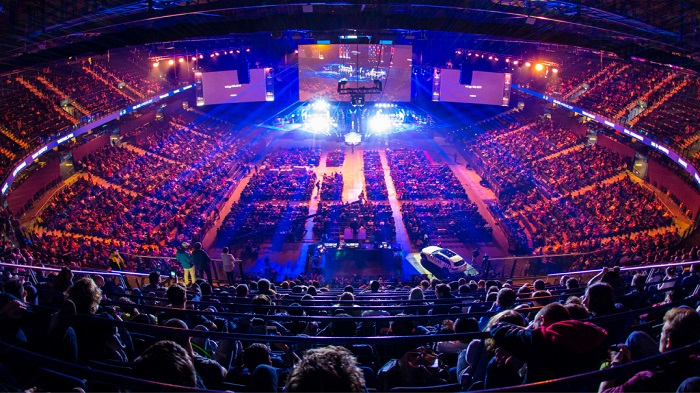
As the multi-state government has integrated electric competition into school curricula and youth programs, state-level championships, college leagues and talent incubation projects are becoming more widespread, and Indian electric competition is undergoing structural change.