
Old Game Developmenter Timothy Cain recently published deep observations on his YouTube channel about the benefits and disadvantages of digitalization. He noted that, while digitalization theoretically had significantly reduced the cost of game production and circulation, those savings had not been reflected in the final sale price, which had raised concerns among industry and players.
Japanese media, Automaton, reported that Timothy Cain, one of the founding fathers of Radiation, was the first producer and chief program designer of the series ” Fallout: A Post Nuclar Role Playing Game ” , who in recent years had been the director of RPG ‘ s Development of ” The World Out of Heaven ” in Black Rock Entertainment and had been involved with creative consultants in the development of the new book ” World Out of Heaven 2 ” , launched last month.
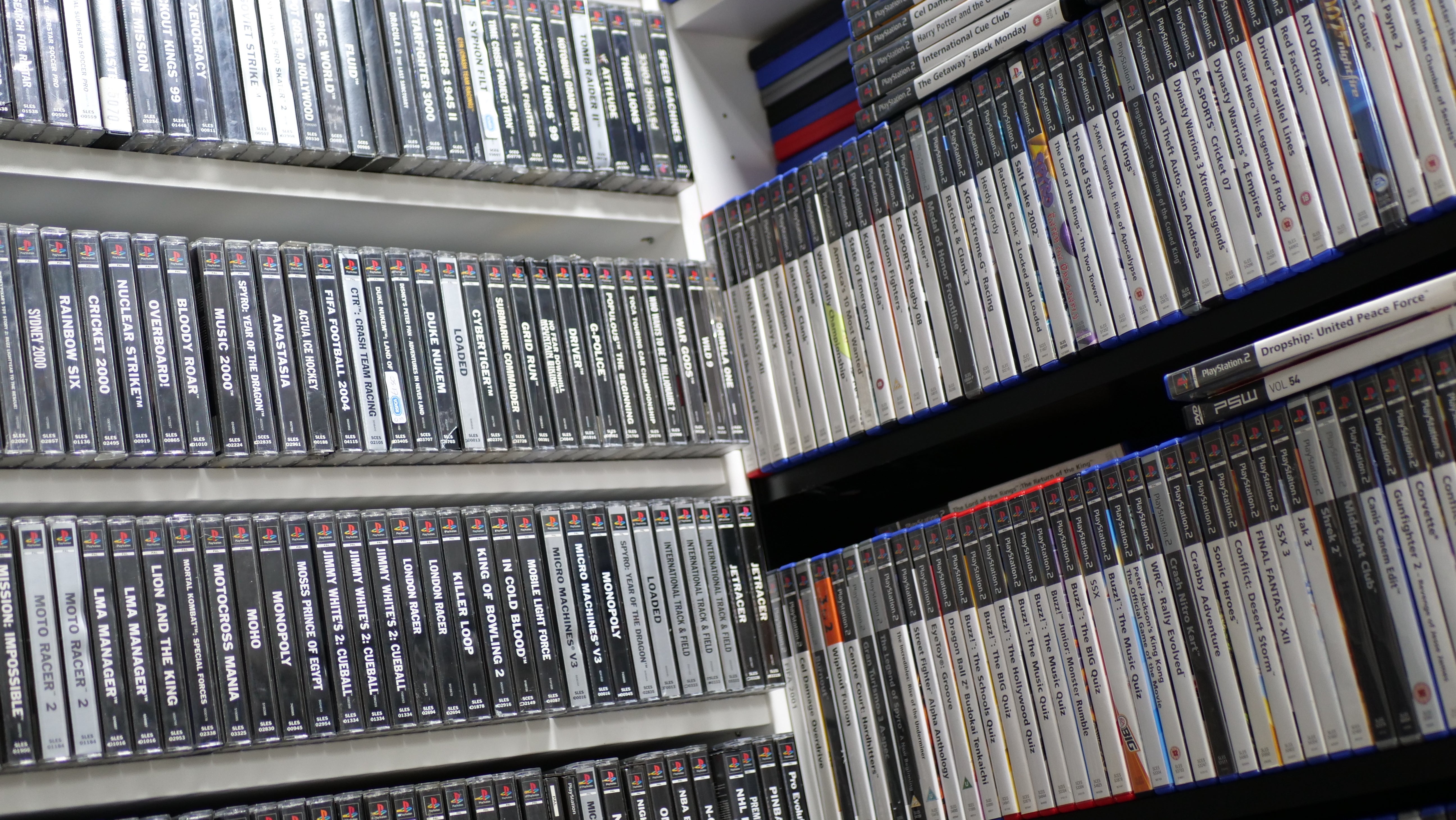
On October 27th, Cain launched a film on its channel entitled “Entity VS. Digital Game Media” to respond to fans’ questions about the decline in the entity’s specialty and to analyse the quality of the game from the physical media to digital downloads.
Cain pointed out that one of the most obvious benefits of digital games was that the mode of delivery was monolithic, and that players could only buy them on the Internet, without having to worry about the specifications of the physical media in the past.
In the 1990s, for example, the game could be distributed with 5.25 inch disks, 3.5 inch disks or CD-ROMs, with players having to identify in advance the compatible formats that their computers can read, and stores having to prepare separately, which not only increases management costs but also tends to cause players to buy the wrong version.
In addition, digitalization significantly reduces the physical depletion of games. The disk or disk is perishable after many years, the digital game can be preserved for a long time, and the buy-back and collection of old works becomes easier.
For developers, digitalization reduces the time to finish the game, facilitates global multinational synchronized distribution and reduces logistics and inventory pressure. In particular, Cain mentioned that for independent game developers, digital platforms such as Steam provided unprecedented market access and even ceased to rely on traditional distributors.
However, Cain states that while digitalization reduces the cost of making and distributing games, the “price” actually purchased by players does not decline. Many consider this to be the result of higher development costs that offset the cost savings on distribution, but Cain denies this.
He took as an example his experience in purchasing Super Nintendo games in the 1990s, when standard games were sold for about $59 (about $1,800) and, even after inflation, they did not increase significantly today, in part because digitalization reduced costs and kept the game prices relatively stable.
In other words, the part where costs are reduced does not really feed back to consumers.
Cain also cautioned that the focus was not on price differences between the digital and the physical versions, but that price trends in the overall game market were influenced by a number of factors.
Even in the absence of an entity disk, the digital platform still has to cover the base costs of servers, transaction fees, etc., while the relationship of the entity’s retailers to the second-hand market limits the scope for price adjustments.
In addition to the price issue, Cain lists other issues that digital games can bring:
-
Patch update release facilities, but less incentive for pre-issue amendments: The game can be uploaded at any time, but it also leads to the “first day patch” becoming normal, and the player may have a bug version.
-
Market size has expanded, but not at all: Steam, for example, about 25,000 games were launched in 2025, and most of them may not be interested or consider quality differentials.
-
Second-hand trading is not possible: physical versions can be resold or given, but digital versions cannot be resold in most cases.
-
Lack of entity dictionaries: entity dictionaries, such as maps, manuals or small models, are gradually decreasing unless they purchase high-value collections.
Cain stressed that digital and entity-specific advantages and disadvantages are not simple “who’s better ” , but that the way the game is developed and distributed is evolving with the trend towards digitalization.
The cost savings of the final game are not directly fed back to the player, but may offset the impact of inflation on prices. Future changes in game prices in the global economic environment, as well as higher-cost physical fate, remain a major focus for industry.